Mockingjay Countdown!

Showing posts with label Book Review. Show all posts

Tuesday, October 19, 2010

Book Review: Bright Star

Bright StarBright Star by John Keats

My rating: 3 of 5 stars


I'm starting to think that Keats was more in love with the literary stimulation induced by unobtainable love than he was ever in love with Fanny, but the letters have value where they provide intriguing insight into this psychology. If only there were more.


View all my reviews

Read More......

Monday, September 6, 2010

Book Review: Metro Stop Paris

Metro Stop ParisMetro Stop Paris by Gregor Dallas

My rating: 3 of 5 stars


Walking through my local library recently, I happened upon a book that rang out with familiarity, immediately transporting me back to my one summer in Paris three years ago in which I stood outside the Shakespeare and Co. bookstore near Notre Dame and listed to a memorable little Englishman read his work to attentive bibliophiles, and passersby.

That author, Gregor Dallas, opens his book with an appeal for his meandering approach to French history, writing, "The more history I wrote, the more I realized that history is travelling: if you don't see the places where the major events of the past occurred, you get lost in the abstractions, system-building and theories that have so distorted our view of the past over the last few decades...some historians write history as if the event they describe could have occurred anywhere on the globe."

Unfortunately, while the process of writing the book may have invoked a travelers romanticism for its author, Dallas does not likewise fully immerse and gratify his readers’ senses--his descriptions of physical place are superficial at best, and the use of the Paris metro stops is never illustrative and well justified. Often, Dallas begins with a brief description of space couched in an argument for its philosophical importance—lost in beautiful abstractions about creativity and life and death—and then he too quickly deviates into historical accounts, no longer orienting readers around street corners let alone near the metro stop names that serve as each chapter title.

Still, consider this a mere packaging problem. It does not hurt the book once one lays aside the expectation for a sensorial ride through underground Paris. What shines in the book is the way it lays together many Parisian stories (depicting everyone from Oscar Wilde to Catherine de Medici and Sartre to Debussy), allowing them to play a part in a larger epic narrative. Where Dallas misses opportunities to unite a sense of place, he more than compensates with his insight into character. One begins to imagine time layered on top of itself, and its major players read like the Gods of Greek mythology.

So, while the book is not a complete success (and perhaps ends too abruptly), it does manage to make lives jump from the page, and serves as a meeting place for those who have been there and can remember the sights and smells enough to indulge in their own memories, and feel like part of a story greater than their own.


View all my reviews Read More......

Tuesday, August 31, 2010

Book Review: The Particular Sadness of Lemon Cake by Aimee Bender

The Particular Sadness of Lemon CakeThe Particular Sadness of Lemon Cake by Aimee Bender

My rating: 5 of 5 stars


I'm a fan of 'the gimmick' and Aimee Bender's book applies a pretty fascinating one: its protagonist, Rose, is able to taste people's deepest feelings in the food they prepare. Maybe you're skeptical though. The threat, I know, is that the whole novel will have to kowtow to this central plot device--putting undue weight on Bender's ability to write a decent, unpredictable ending. Well lay your fears aside.
From page five, when I was running the book to my copy machine to save a particularly well written scene, I knew this was going to be something more. Bender, somehow, manages to make Rose's 'special skill' into something less interesting than the humanity it helps her to recognize: her father, hiding blind in his nostalgic idealism; her mother, inexpertly trying to see a place in a family that makes her feel like an invisible student among prophets, a brother who wanders in and out of rooms like a ghost, taxed by the weight of knowing too much without the means to express it, and George, the friend who brings the light, but also takes it with him when he goes. And scattered along the way are numerous tinier allegories, stories, and clues that help you to imbibe this world, taste it as Rose does, and discover it, and her, and yourself along the way. Allow this book to spread over your palate, and it may just reveal to you, I hope, your own special gifts, that you, also, too often dismiss as a curse, because they require you to grow and make something of them.

"Food is all those substances which, submitted to the action of the stomach, can be assimilated or changed into life by digestion, and can thus repair the losses which the human body suffers through the act of living."
-The Physiology of Taste, Brillat-Savarin
(epigraph to The Particular Sadness of Lemon Cake)

Rose on Doritos:
"What is good about a Dorito, I said, in full voice, is that I'm not supposed to pay attention to it. As soon as I do, it tastes like every other ordinary chip. But if I stop paying attention, it becomes the most delicious thing in the world...
...a Dorito asks nothing of you, which is its great gift. It only asks that you are not there."
(pp. 127-8)


View all my reviews Read More......

Friday, August 27, 2010

Book Review: Mockingjay by Suzanne Collins

Mockingjay (Hunger Games, #3)Mockingjay by Suzanne Collins

My rating: 4 of 5 stars


My friend Amy and I have been speculating on which district we'd like to be from, and while I won't spoil it for anyone, I will say that I came away feeling like one of the hairdressers from district one-- a little bit idealistic and naive. The final book turns on you in a way that makes the message hit home, but the love story not so much. It wasn't what I was expecting, but I feel like I learned something in a gut-wrenching way.


View all my reviews Read More......

Thursday, March 5, 2009

Book Review: Flannery: A Life of Flannery O'Conner by Brad Gooch

From square one, my interactions with this biography of Miss Mary Flannery O'Connor were fraught with drama. I walked into my local Borders with the intent, nay the need, to pick a memoir that would define my own self. I had to know my mentor or else I felt surely that I had lost myself. What would be my ambitions? Who's footsteps would I tread in, like a child hopping through boot tracks left in heavy snow. I felt, oddly, as if this choice would map all subsequent choices, as if this decision would reveal "the figure in the carpet" of my life as I began to weave it.
Well, anyways, after a bought with horrific doubt as I decided that Susan Sontag was not the woman I aimed to be (she was all intellect without the grounding forces of faith and hope) I considered Edith Wharton but felt my own upbringing was too unlike hers (and I ached at the thought of reading 700 pages of life story, no matter who the writer was behind the words)so I nearly walked out. And then I spied it... the wall of new biographies standing along a far wall. And there it was" "Flannery: A Life of Flannery O'Connor" by Brad Gooch.


I chose O'Connor to serve as my mentor figure simply because she was so glaringly unlike the other female figures I considered. She seemed to be the only woman in the room who matched success with simplicity, and a depth of mind with a depth of character that did not require illicit love affairs and bouts of alcoholism and madness to add spice to her life and her work. That, and I felt a warm and happy resolve at picking a fellow, humble Georgia native (not to mention I was drawn to those darn peacock feathers on the cover, as I was--you all know--Mrs. Peacock for Halloween). In short, our meeting seemed predestined. The figure in the carpet was becoming clear.
Now, there are three things that y'all ought to know about this book, and this woman. First, Flannery's best work appeared after she was forced to go back home following her Lupus diagnosis. This should be a message to us all that we will thrive when we stay true to our selves and do not try to replicate the incidences in the lives of others (i.e. we don't all have to live in NYC to be artists). A strange lesson indeed when considering this month to be wrapped up so completely in our attempt to find a mentor to emulate.
Second, she worked her whole life toward coming closer to her sense of the spiritual world. I never expected to take this lesson away from the book but she displayed a humility and patience in her study of theology that reminds me of images of Buddhist monks, and acetic hermits. There is a poise to her spirituality that I'm drawn to, wanting to harbor a similar meditation in my own life. I can't help but believe that we all have a spiritual self that needs nurtured in order to maintain our grasp on those things that truly matter in this world. This seemed to be a sense of inner power for her. I can only hope to grasp something of that for myself, a church of thought and being far removed from the material and trivial.
And finally, Gooch's book was by no means a perfect one. It played out too chronologically, and seemed so hands-off as if he was somewhat afraid to grasp the fabric of this life too tightly. But all is forgiven, as Flannery herself is left to emerge from the words. Again, that figure in the carpet is sought after and seen without the magnifying glass of our biographer. No wonder he titled the book "A" biography instead of "the" biography of Flannery O'Connor.
So, in short, I quite enjoyed reading this book, and feel so sure that I have made the right choice of mentor in the end. My life can now unfurl without regret. Mmm-mmm. :)
Read More......

Tuesday, March 3, 2009

Book Review: Personal Icon Month

The month of March was "Personal Icon" month for the book club portion of the salon. Pretty self-explanatory but both Casey and I chose a memoir or biography about a person we admired. So far this has turned out to be an extremely fulfilling month and I encourage everyone to participate with their own personal icon! It's not too late to find an icon/book! So I chose the book "Me: Stories of my Life" by Katharine Hepburn.


Honestly I chose to read about Katharine Hepburn because I really admire her sense of style. Also, she has a strong but sensitive spirit in all of her movies that I've always admired, so that was another reason I wanted to read about her. But really, it was mostly because of her sense of style :). I am so pleased to say that after reading this book I have so much more to admire about her. I won't go into specifics about her life so you will still feel compelled to read the book, but I will just say that her joie de vivre, strong spirit, and honesty all inspired and touched me. I can only hope to lead a life half as interesting as hers was. But even if that doesn't pan out, I hope that I can capture her amazing spirit and lead my life with the style, grace, and strength that she did. She was truly a force to be reckoned with and she never let anything or anyone change who she was. So inspiring.

And besides how admirable Katharine was, this book was so interesting in the glance that it gave into Hollywood during it's most glamorous days. Katharine spoke openly and honestly about everything and this held true for her discussion about the movies she was in, how the film industry worked, and the people she met on her films. This was a great little slice of the fascinating world of 1930's and 40's Hollywood.

Well Katharine - here's to you. You'll always be an inspiration to me. You were one classy lady.


Read More......

Thursday, February 26, 2009

Book Review: Women's Historical Lit. Month

At the Salon meeting we held to decide which books to read this year, Casey and I decided that we wanted to read a book that was fictional, written by a woman, and written more than a century ago - and thus was born Historical Women's Lit month. We settled on a book by Elizabeth Gaskell, (on my part) due to the great success of the BBC "Cranford" series which they showed on PBS. Cranford is pretty short, and one of her other books Wives and Daughters was way too long for the short month of February - so there was North and South, just right in length (if maybe leaning towards the too long side), with a lot of literary value, and an equally good BBC special. I'll admit, I had already seen the BBC version of North and South, and Mr. Thornton is really hot. So I was pretty excited about reading this book. So was it as good as I had hoped? Find out after the cut!


Ok. So while the movie version that I saw stays very true to the book, it was another bird altogether trying to read this thing. For the first 150 pages I had to FORCE myself to sit down and read. The words seemed inordinately tiny on the page and it was a chore to get through a chapter. It was one of those affairs where it's a pretty long book already, but it seems even longer by how long it takes you to read it. In fact, I had to take a break like 60 pages in and read a romance novel in hopes of getting my reading juice regenerated. I mean, what was weird though was that it's not like it was bad or unenjoyable, it was more just bleh.

However, everything turned completely around for me when Margaret moved to Milton and was starting to get settled into her new environment. After page 150 I went into a reading frenzy and read the rest of the book (all the way to page 425) in one day. Maybe it's just that I got used to the narration style, or maybe it's that the book actually got interesting at this point. I think probably a little bit of both.

Mostly what made the book more interesting once Margaret moved to Milton was the introduction of Mr. Thornton, the proud Mill owner. Of COURSE Margaret hates him when she meets him, but Mr. Thornton is totally beguiled by Margaret and thus follows a series of charged debates between the two. Honestly, the interactions that Margaret had with Mr. Thornton were pretty great. So great, and so sparse that I really wish there had been more. But the scarcity of their interactions and how charged they were aided in spurring me on to read more so that I could get to the next time they faced off. I will admit though - reading about their interactions through Margaret's eyes wasn't HALF as interesting as when we saw them through Mr. Thornton's eyes. Mr. Thornton was a much stronger character than Margaret in my opinion. Yeah - Margaret was courageous and had spunk and a virtuous sense of justice - a veritable modern woman, which was great. But Mr. Thornton. A self-made man, with strong ideas of what "manliness" is, and surprisingly sensitive! It was amazing! I honestly felt like, and this is a good thing, that he is one of the models for what romance novel heros are today. It was actually odd to me how much he fulfilled my modern views of what a good leading man should be. To illustrate - here is a screenstill from the BBC movie version that perfectly describes to me how badass Mr. Thornton is.


Heck yes.

But back to Margaret. She was well developed, had all of the right elements there (independence, spunk, courage, confidence) to make her relatable and someone who we want to see succeed, but something just seemed to be missing. I liked her a lot, but I often found myself wondering - "now what is it that Mr. Thornton loves her so much for?" What Margaret really did for me is underline how great Jane Austen is. That seems like a non sequitor, but I swear it isn't totally. All of Jane Asuten's heroines are so relatable and we just fall in love with them. We want to BE them. If Lizzy Bennett and Margaret Hale had a catfight, Lizzy would just straight up rip Margaret a new one. I don't know, I guess we can't expect everyone to be as awesome as Lizzy, but it just seemed like she was trying to be that awesome, but fell just short of it.

Besides just Margaret and Mr. Thornton, there were some really great (and annoying) secondary characters. I loved Nicholas Higgins, her brother Frederick, Sir John, and her Dad (he SO got shafted by being called feminine all the time). And I loved to be annoyed with her cousin Edith and Mr. Thornton's sister. But there were a couple characters who kind of annoyed me when they weren't supposed to - namely Bessy Higgins and her mom. At least I don't THINK we were supposed to be annoyed by her mom. Either way - they were both big complainers, and yeah, sure, they were dying. But do we have to TALK about it all the time? What a Debbie Downer.

Well that basically concludes my review of this book. I'm interested to hear what the rest of you (Casey) think :). And ALL of us - wether you read the book or not (Allison) - need to watch this movie in celebration of our Women's Historical Lit. month.
Read More......

Friday, January 9, 2009

Book Review: The Maltese Falcon by Dashiell Hammett


After reading The Maltese Falcon, all I can say is that Dashiell Hammett would have been a pretty stand-up screenwriter. Strip away the description a bit and pack it into that standard skeletal formatting and you have a nice rough draft of what turned into John Huston's subsequent script by the same name. There's just one thing about screenwriting you have to keep in mind: dialogue is your best friend and you ain't got much else to thread your art on. So I guess you could say he's doing everything right. The only problem is that his 'Falcon' isn't a script at all. It's a novel and the same rules just don't apply.


Example of good dialogue:
"Jesus God! is this the first thing you guys ever stole? You're a fine lot of lollipops! What are you going to do next--get down and pray?"

Geeze Louise, he cracks me up! This is a good show of how kick ass Sam Spade is, as well as a show of how characters are larger than life and chock full of attitude. Perfect exaggerations. I want to be so cool. Verdict: Dialogue, awesome; Characters: the coolest.

Example of bad writing:
"Samuel Spade's jaw was long and bony, his chin a jutting v under the more flexible v of his mouth. His nostrils curved back to make another, smaller, v. His yellow-grey eyes were horizontal. The v motif was picked up again by thickish brows rising outward from twin creases about a hooked nose, and his pale crown hair grew down--from high flat temples--into a point on his forehead. He looked rather pleasantly like a blond satan."

Oy vay, where to start? I now ardently hate the letter v, how do you look pleasantly like a blond satan, and did he really just write "the v motif picked up again??" See, if this was done in scene description he could have gotten away with it. Mere design notes. But in literature?? Tsk tsk, sir. You should know better than to let your audience know that you're weaving in a motif. That's like a magician explaining his tricks!

Anyways... the point is that Hammett's work would work if he'd take his own thumb off the page and let me get to reading. Too often it reads slower than it ought to because he's telling you how to see it instead of just showing you. Still, you gotta admit he sees it straight. The book may not function perfectly on paper, but it exudes so much style I have to go buy a hanky now so I can delicately mop it off my stricken brow. That and I could toss Brigid O'Shaugnessy just to get one more scene with Spade in the same room with Effie Perine. Shoot, every time they pair up you'll start to wonder if your local private eye is looking for a new secretary because, well, that's just damn sexy.


Read More......

Wednesday, September 17, 2008

Book Review: Dana Thomas's "Deluxe: How Luxury Lost its Luster"

This book probably should have been reviewed by now since it was supposed to be read for August's Non-fiction month. BUT I just finished it a couple of days ago (and Casey was slacking?? :)) so it has unjustly gone unreviewed. Until now.


I really enjoyed this book. It was fully engrossing, and was very easy to read, which isn't always the perception of non-fictions. I suppose it helped that the subject matter is something that I'm very interested in - hence why the book was chosen in the first place. But yeah.

This book was great because it gave you information on ALL aspects of the Luxury industry - it's history, business structure, how the products are designed and made - you even get to learn about fake luxury goods. (Btw - I am NEVER buying another fake again in my life.) Even the aspects that wouldn't normally be as interesting to me - mostly the business stuff - were well written and presented so that it was still very interesting. There was nary a yawn-inducing chapter in this book.

So yeah - it was a very good read. But besides that - what did I think about what it had to say about the Luxury companies losing their luster? Is Luxury really dead?

I think that Dana Thomas had a very good case for the Luxury companies having lost their true sense of Luxury. Basically her point was that when Luxury companies went global and started focusing on making money rather than creating quality, specialized pieces for an elite group of customers, they lost their luxurious souls. In some aspects I agree with what Thomas says, but really you can only accept her arguments if you intrinsically agree with her concept of what Luxury is.

When it comes down to it, Dana Thomas basically thinks that Luxury is the experience. She talked about decreasing manufacturing quality, but the fact of the matter to me is that the luxury companies still produce clothes that are light-years better (in fabric choices, construction, fit, etc) than lower-end clothing choices. To me, it seemed that what Dana Thomas was really mourning is the loss of the EXPERIENCE of luxury. That is to say - the idea of going to this haute couturier where only the truly upper crust can afford to go, and the designers know you personally, and tailor everything exactly for you, and know your clothing preferences, etc, etc. Now, fashion has been democratized - the same looks are mass produced, there is no more one-of-a-kind clothing, there are no personal relationships with the couturiers. Luxury is officially dead.

I see what she's saying, but I don't totally agree. Luxury is still alive and well! It just may not exist where it used to. Yes, we've lost the experience of luxury as it used to be. But honestly - who was privy to that luxury before? I certainly wouldn't have been - nor would most of the population for that matter. So really, luxury is only lost for that upper crust who could afford it in the first place - and seriously, I think they've probably found other avenues. I don't mourn that loss for them at all. All that's happened is that the illusion of that luxury, in a diluted, mass-produced form has been made available to the rest of. No, we shouldn't delude ourselves into thinking that we're now one of the upper crust too because we can buy from the same brands that they do, because we're not. But now we do have these higher quality clothes to aspire to. What's wrong with that? I don't think there is anything wrong with it. The only thing that I think could be an issue for me is people thinking that these brands are better just because their name is well known. That for me is not true. Don't let the man decide what you like! If you find something that you love love love at Target - then that can be luxurious for you! It doesn't need to have the price tag, or the brand name to be luxurious. If you really love it, and it fits you well and makes you feel good, then it is luxurious.

All-in-all I think that book was great at making me question what is "Luxury" to me. I know that I've decided that "luxury" is a personal experience. My own personal luxury will be very different from any one else's personal luxury. The Luxury goods industry may have lost its soul to the corporate world, but true luxury will find its way out in other forms.

So what does luxury mean to you guys? It's something to think about for sure.
Read More......

Tuesday, August 5, 2008

Book Review: Stephenie Meyer's "Breaking Dawn": The Final Book of the Saga

So as you all know, I started reading the Twilight series and found myself becoming increasingly obsessed with them. They're just so readable! Also as many of you may know, I went to the midnight release of the fourth and final book in the Twilight Saga, Breaking Dawn.


Here are my thoughts on the final book.


First of all, I would like to note that I have ALWAYS said that while these books are a very addictive read, they are NO Harry Potter, as some people persist in claiming. This fact was reaffirmed by the midnight release. There were hardly as many people here as there were at Harry Potter. I was number 463 or something, and I got my book about 20 minutes after midnight, at the very latest. Harry Potter took hours and hours, and even then we still had to go to the Kroger to get it. Also - not as many nut jobs at this release as at Harry Potter. Far fewer people where dressed up or chanting at this occasion.

Second of all, I didn't review the 2nd and 3rd books of this series, but I don't really think that's an issue. I got the first one, and now I'm getting the last one. Just be content in knowing that 2 and 3 are pretty much par for the course. If you like the first one, you'll like the rest of them.

So onto the book.

I would like to say first off that while Edward really bothered me in the first book, and Bella not quite as much, there seemed to be some interesting inverse relationship that went on with the rest of the books. With each book, Edward annoyed me a little less, and Bella more. Finally in this last book, Edward hardly bothers me (still though - I would NEVER want to be in a relationship with him at all - Team Jacob! - except no Jacob for Bella, she doesn't deserve him), and Bella seriously just annoyed the crap out of me. I am happy to say however, that Bella reached her pinnacle of annoyingness in book 3. In this final book (due mostly to special circumstances that I will not relay so as not to spoil anything) Bella really let go of a lot of her annoyingness. But not really until the last third of the book.

Speaking of the thirds of the book - I take issue with the first third of the book. After finishing the book, I don't have a real problem with this books chosen plotline, but when things were getting put into place in that first third I SERIOUSLY thought that Stephenie Meyer had just taken it way too far. Not only did the plot seem like just a little too much for me, it made me quite uncomfortable. I'll tell you what - there were a couple of really awkward hours of reading in the beginning. But I got over it... reluctantly.

The second third of the book was better than the first but seemed extremely long and stretched out. I think Stephenie Meyer and her editors really could have made this section more concise. I get that she was trying to make us feel the same kind of tension and expectation that the characters were feeling from really stretching it out, but it could have been done just as successfully with a couple hundred less pages it seems. It put me in mind of the part in Harry Potter 7 when they're out in the forest and have no contact with anyone but eachother and you're just like, "Ok J.K. - I see what you're doing here, and you're still a genius, but I have GOT to get out of this forest!"

The last third of the book is where things really got good. Of course suspense ensues - will our characters live through ANOTHER intense vampire fight?! I won't give anything away concerning that though, I'll just say that it was a pretty edge of your seat scene. Exciting reading.

Overall the final book was just as enjoyable as the other Twilight books. Breaking Dawn was very fun to read suspenseful page-turner, and had even more great insight into the fantasy world that Stephenie Meyer has created. The book may have been extremely predictable, but I really just didn't care all that much. I think this book, as with all of the Twilight series, was a great escapist read. It's pretty easy for me to see why these books have gotten such a large following. Because I'm not going to lie - I wouldn't hate being a vampire if I could be like the kinds in these books. I just want to know what I would look like and if I would have any special powers! I've actually been musing on that alot - if I did have a special power as a vampire, what would it be?? I guarantee that you will be wondering the same thing if you read this.
Read More......

Tuesday, July 29, 2008

Book Review: "The Story-Teller" by SAKI


I know what you're thinking: 'Saki? Is that like sake? C'mon, Casey, how does rice wine write a book?' Well, all I can say to that is (a) That sounds like a bad popsicle joke, and (b) don't be ridiculous. It doesn't.
Hector Hugh Munro, however, (best known by his pen name 'Saki') can most certainly write a book, and he does it well to boot. No joke.

"The Story-Teller" is a collection of thirteen short stories, all but one of which use children as the central characters. Yes, children. Turned-off? Not keen on the bubble-gum, Disney-pop-morality and charm that typically accompany youths in literature? Don't be fooled. Burmese-born Saki uses juveniles to fuel daringly dark comedy vignettes that range from the self-proclaimed 'improper story' in the book's title tale "The Story-Tellers"  to the downright sinister "Sredni Vashtar."
Saki, a.k.a. Hector Hugh Munro
                                              
For a small taste of Saki's style check out one of the included stories, "The Toys of Peace," on iTunes under the Weekly Short Stories from Librivox podcast (keyword Librivox). You can also check out other stories in the public domain at the Librivox website at http://librivox.org/

Read More......

Thursday, July 17, 2008

Book Review: Notes From a Small Island


     Let’s say you happen to be traipsing about in your local bookstore and you chance upon a little novel pressed in among the rest but this one, in its glorious good luck, catches your eye. You pick it up, give it a flip, and begin perusing the story summary on the back. This book, you read, is about a middle-aged man named Bill. So far so good, eh? Bill, it seems, is about to move back to his hometown in Iowa after living twenty years in England. Intriguing still.   And (bless your soul there’s more!) Bill has set his heart upon a six-week journey through the vast countryside of his expatriate homeland—trains, taxis, and hiking galore—before leaving for The States. Certainly a fine foundation! This must be a delightful tale of a man in love with a country: its people, its land, and even its faults. Yes, this is a fine book indeed. The only problem is that no such book exists, only a slatternly substitution: “Notes.”

       Notes From a Small Island, you see, is not Bill Bryson’s adoring though unflinching look at the country he called home for twenty years, so much as it is the journal of an arrogant American prick who finds it his right to dismiss train-loving old men, harp on hoteliers because they do not meet his own schedule, and insult young fast-food workers as a cure to his own poor mood. Do you doubt it? I’ll admit there are other scenes besides, of course. When Mr. Bryson isn’t criticizing his fellow citizens, he’s harping ceaselessly on the inadequacy of his surroundings, most notably the architecture, saying generally that the English seem too thick skulled to understand what makes their townships beautiful as they seem to erect only buildings that Mr. Bryson deems unworthy and eye-sores. And somehow (I say somehow because the fact weighs overwhelmingly on my stores of faith to believe it) the English people have voted this book the most representative of England in 2003 according to the BBC News. Perhaps it is their English courtesy that allows them to so graciously overlook Mr. Bryson’s haughty disdain.  

Overall: C -- Funny and mildly informative if you can avoid imagining having to endure so much as a meal with its author.


Read More......

Tuesday, July 15, 2008

Book Review: Stephenie Meyer's Twilight - Cutting Through the Hype

So I don't know about you guys, but I have heard a lot recently about this "Twilight" series. I've even heard it being harkened as the new "Harry Potter" series. People are seriously obsessed with these books. Doubt me? Just type in Twilight in Google and you'll see what I mean. With the first movie harkening, and the fourth book about to come out in just 17 days (with midnight releases planned at a bookstore near you), Twilight mania seems to be all around us. So I wanted to read this book and see what's up? Will this book live up to it's hype?


I have slavishly applied myself to reading this book, all 498 pages, in two days, just so I can cut through this hype as quickly as possible. All for you guys. I'm selfless like that. So was it the new Harry Potter? Did it live up to all of it's hype???


Ok, for me this book was enjoyable (enough so where I had no problem finishing it in two days despite it's length), but not so enjoyable that I feel like I just HAVE to get started on the next one to see what happens next. I will break down for you all why this is so in two different lists (since girls love lists and all).

Lived up to the Hype:
-Plot kept you wanting to keep reading without just shamelessly TRYING to hook you into the next chapter
-Well developed characters; likable for the most part.
-Well thought out, and interesting fantasy world. Or IS it fantasy??? :)
-It FINALLY made me understand why the whole vampire thing is so hot to some people.

Didn't Live up to the Hype:
-Romance TOO intense! I would have been like - get me out of this! Too much pressure!
-FINE, I get it - Edward is really beautiful.
-Edward actually a little creepy to me. Yes I am aware he is a vampire, but that's not why. Where I feel that most teenage girls reading this are going "Why won't someone do that for me?", I am going - whoa Dude, I think you maybe slipped into crazy-ville with that one. I don't want to give anything away, so let's just say that he went a little TOO far in his desire to want to be with her all the time. Did I just give it away a little? Oh well.
-COME ON, just give into her wish. I don't know why you wouldn't. I think you have unrealstic expectations for your "love" otherwise!!! Whatever.

So was it the new Harry Potter? Heck no. Harry Potter had better characters (Yes Ron - you), a more compelling fantasy world, and much more detailed and intricate plot lines. With Harry Potter you could stay up for HOURS just speculating and reading into passages and things that people said trying to decode what they really meant. Nothing was written into those books without it having a purpose. Twilight lacks that same kind of purposefulness - but then I don't really expect that from most books. Whereas Harry Potter is genius, Twilight was just an enjoyable book, and there is nothing wrong with that.

If you want a quick, fun, escapist novel - this would be a good book for you. Especially if you have a proclivity towards vampire books (there were some really...tense... scenes that were rather enjoyable.) I will definitely be reading the rest of the series, but I won't be rushing to do so. If my sister didn't own them all already, it would probably take me awhile to get to them, because I definitely wouldn't be going out to buy them myself. But I most definitely WILL be going to see the movie when it comes out (don't expect me to be seeing it first day though. Unless Becky makes me go with her first day.)

Overall, I give it a solid B+.
Read More......

Saturday, July 12, 2008

Book Review: The Secret Life of Bees


I hate blog cuts. I just wanted to say that first. If you're curious why it looks like there are two posts on this book review its blog cuts' fault. I think i'm going to need a tutorial on them in person. But until then I;m just gonna post this review the old fashioned style.

Alright, so I know that this book isn't on the reading list but I thought it was worthy of a review on the blog anyway. Plus, we could just count it as being for August sence august is "Made into a movie month". So anyway, this book was really surprisingly good. It was a short read but packed with inciteful comments on life and regrets and all kinds of things that people struggle with. Despite a main character which I think is at times a difficult one to really love, this book's supporting characters are alive with mystery and then depth. They move the story alonf just as much as the main character does. If you want to read more do so . . . .
First off, i just want to say that this book is good because it didn't drone on and on for hundreds of pages. It packed lots of wisdom and learning into a fairly short read which i like. But it wasn't too fluffy which these sort of books can sometimes be. The main character was this girl who seems truly sad at first and then she goes through these things that happen and adapts and you can feel her actually growing more mature and grown up as the book progresses. A big theme with this book is motherhood (believe me, it's not really a hidden theme. In fact its pretty much spelled out in the last few pages). It was very touching because this girl's mother died because of a very stressful event that occurred and how she deals with that is fascinating. Also, all of her replacement mothers are such wonderful characters. They are so mysterious at first and then develop such depth. Its remarkable.
Secondly, there was a little bit of a romance which ensues that I completely loved. And it kept me really interested in the girl at a time when I could have begun to think her a tidge whiny.
Lastly, I thought this book was a very powerful story of southern racial integration. There are so many happenings that are driven by race. Another main theme of the novel is how black and white people have to learn to live together (spoiler alert!!! there's a romance between the girl and a black boy).
Lastly lastly, I also loved how the women come up with their own brand of spiritualism. Mainly because it was based on the Virgin's story and involved many aspects form Catholicism that I loved the most. It was a little weird at times but I loved it anyway. And you'll love this book if you read it. It really will make you look at motherhood, spiritualism, and racial issues in a whole new way. If anyone wants to borrow my copy, they certainly can.
Read More......

Tuesday, July 8, 2008

Book Review: Jack Kerouac's On The Road

So what can I say about On The Road? I feel like this book slapped me in the face and I don't really know WHAT to say about it. For this before the cut section, I guess I'll just stick with posting this picture of the REAL Sal Paradise and Dean Moriarty (Jack Kerouac - pictured on the right, and his friend Neal Cassady - on the left)


This may be shallow of me, but it will make sense after reading the book - I was very pleased to see in my internet searching that both Jack Kerouac and Dean Casssady are extremely good-looking men. If they hadn't been then I think the book just wouldn't have been as good. That's bad of me to think... Oh well


But seriously, which as much carousing around and slutting it up as these two dudes did in the book, I would have found it much less believable if they were ugly. Also, I guess it makes their whole hobo lifestyle more glamourous. And finally, as sad as it is, it is so much easier to forgive an attractive person for the kinds of moral indiscretions that these guys partake in in this book. SO enough about their real life attractiveness and onto the book.

This book was really perfect to read for a summer traveling theme as it featured both adjectives in an abundance. I had been experiencing some extreme lust for the hobo lifestyle recently - who knows why, I sure don't - so reading this book was a real way to indulge in living the lifestyle without having to actually do it. And seriously, after this book, I think I really wouldn't want to. The unstable lifestyle they lead in this book is certainly not one I could tolerate. It was a real treat to experience through literature though. It is things like this that I think literature are for. I was able to live out a secret desire of mine through a book and that's a real beautiful thing.

On the other hand, I can One Hundred Percent see how this book could become a sort of ambulatory, beat bible for someone who was so inclined to actually go through with their hobo desires. This book isn't the keystone of the beat generation for nothing. But not only was this book a great educational lesson into the beat life, it was a really interesting examination into the nature of friendships and the self as well. Also I enjoyed reading this reflection of America from the 1940's. It kind of takes you back to America's past glory and reminds you why this actually used to be an inspiring country. It makes me wish I could experience America in that way, but the book leaves me feeling that maybe I still could. I don't know.

All in all, I think that this book lived up to it's hype for me. It had an interesting plot, multi-dimensional characters, an interesting experimental writing style - which I think added to the beat feeling of the book. The writing style was a little distracting at first, but in the end the frantic, confused sentences are necessary to really FEEL the beat lifestyle.

My only beef with this book is that all of the events and characters are based on real events and people. I even found a list on wikipedia that said the character name and who it actually was. In a way this is really cool, but at the same time, I spent so much time in the book trying to figure out who was actually who that I couldn't just forget about it and pretend that it was all fictional. I really shouldn't have read the introduction to the book first in this case. It messed me up too much. So I guess that's all really. What did you think??
Read More......

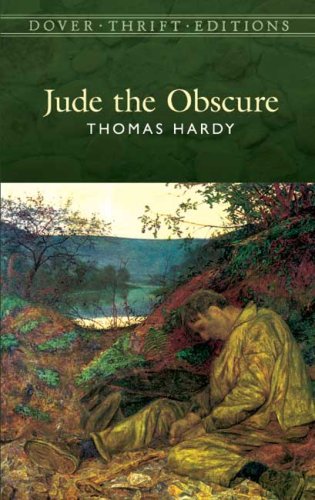
Book Review: Jude the Obscure by Thomas Hardy


How does one start with a schoolmaster and a young boy, and end with two women looking into a grave? Surely someone can make sense of how this education-laden image begets yet another one of Hardy’s gender themed novels.  Surely, though I am not the one.

While I did enjoy Jude the Obscure—it was what any good Hardy reader expects with its grand eye for social commentary and melodramatic tragedy—I can’t help seeing the discrepancy between intention and product.  Where Hardy fails to write the story he seems to have desired, he succeeds in instilling this pursuit in the very essence of the work.  It is a book about failure, and it is one. 


Correct me if I’m wrong but I believe that this work was supposed to be about a boy’s attempt to join the ranks of scholars.  Is the point, then, that women are the disruption of this aim?  I don’t recall any inclusion of the alternative, the scholars at Christminster touting their sexlessness around town.  No, I think the problem was that his story about a boy reading all the time was boring.  So he changed it.  Jude couldn’t get anywhere because he never did anything truly productive, and Hardy couldn’t keep telling the story of some guy with his nose buried in books that was bound to go nowhere.  That story was shelved for the more “interesting” aspects of Jude’s history, the moments when he made choices and mistakes.  When he instigated and struggled and interacted.  Therefore, if one looks deeply enough, there lies a theme more thought provoking than the more obvious “What is love in the eyes of God and man?” and  “Do we serve our God if we serve societies mores and superstitions?”  This theme is: why do we read these ‘classics’ at all? 

Yes my fellow book-loving-bloggers, why are we here?  Do we read with a sort of hero worship as Jude read to find his mentor Mr. Phillotson?  Do we read to better ourselves?  To find greatness?  If the later is the case than keep in mind the lessons learned by Jude:  to follow, no matter how diligently, is not a life but a characterization.  If you want your efforts to be your story, than pave the way yourself.  Find what it is that makes your efforts productive, and not just a chauvinistic rehashing of written words.  Don’t fall to Jude’s frenzied, drunken quote-ranting.  Don’t let yourself be led into more “interesting” territory.  Don’t be scared into thoughts of mores and love, grand themes with little else but lazy controversy.  Read, and thereby create. Invent. Formulate. Discover. Devise. 

Forgive the sermon, but when I first went to review this work, I found myself tempted to read the word of others. I needed to know if I’d caught all the themes, and knew which scenes were praised and which were trivialized.  I needed my opinion handed to me.  How scary is that?  Though, by the way, I thought the book was grand when Hardy stopped digging his heels and allowed his talents to shine in all of their grotesque über-tragedy glory.  Thumbs up.  Gold stars.  Smiley faces and high fives.  There’s my review and I’m sticking to it. Amen.


Read More......

Monday, June 30, 2008

Book Review: Jane Austen's Emma

So I just finished reading Emma by Jane Austen for the first time. I mentioned so to Casey and she suggested I review it on the blog. Really, lest we forget, this blog was intended for literary purposes, so it makes perfect sense! I submit this post as a plee and an example to be followed: when we read a book, whether it be for the book club or for our own enjoyment, we should post a review on it! (on a side note: Allison - this can help us start to formulate a collective book database with which we can ultimately create the most comprehensive and accurate book suggestion quiz on the internet! Our dreams are such lowly ones :).) Except maybe I make this addendum - when we finish a book for the book club maybe we shouldn't go so much into it so we don't spoil anything if others haven't read it yet.


So without further ado, my humble thoughts on Emma.


So first of all, I would like to say that in looking for images that pertain to Emma, I found it extremely annoying to have to wade through so many pictures of Emma Watson. Second of all, looking through my little book of books that I have read from 2007 until now, I found it shocking that until 2007, the only Jane Austen book I had read was Pride and Prejudice. Even though I had read P&P like 10 times, it was still totally unexcusable for someone who claimed to love Jane Austen so much. But I am pleased to say that since the beginning of 2007 I have added Sense and Sensibility, Mansfield Park, Northanger Abbey, and now Emma to my Jane Austen list. I think that Emma would probably rank third, or maybe tied second - first being P&P and second being Northanger Abbey.

Jane Austen is always amazing at creating realistic, sympathetic, and often hilarious characters, but Emma I think had a real abundance of them. Emma was just so relatable in all of her faults, Mr. Knightly just so sexy in his older and wiser "I will teach you" kind of way, Mrs. Weston so lovable, the Eltons so abominable. It was all just amazing. Every character seemed so real, and every character ellicited exactly the kind of response that I think Jane Austen intended. That is good character writing I think. Also I loved how every character had their faults, but they could always be forgiven, especially in the cases of Emma and Frank Churchill. (Not the Eltons, they're just unforgivable, but in that way where you think of all the good bonding that Emma and Mr. Knightly will share for many years to come in the ranting that will undoubtedly be directed at them.)

Jane Austen is just so genius at creating a world that you are transported to. You are invited to become her heroine and as I always accept unquestioningly, the emotions you feel are as potent and true as if you actually were the heroine. Like seriously, I could not for the life of me get over how disgusting Mrs. Elton was. Yuck. What made this book so great was that I would totally like to live in Emma's world.

I also really related to Emma. I think the fact that she was able to recognize her wrongs in the end and felt so much shame from them is just something that we all can connect with. Haven't we all felt that emotion before that's like - God I suck as a person right now. But Emma was so good at learning from her mistakes which was very heartening. Also I just loved that Emma had no intentions of getting married ever - so modern of her, even for now (which is the sad thing). Just think, still today people feel like they HAVE to get married, and often by a young age. As Mr. Knightly noted (very wisely I think) "So early in life - at three and twenty - a period when, if a man chooses a wife, he generally chooses ill." Mr. Knightly says 23 is way too young to get married and I trust Mr. Knightly - so I take this for validation in thinking it's good to wait awhile to "settle down". :) Seriously though, I just think it's amazing and cannot get over the fact that this book was written in 1816, but it still is so relatable and holds many valuable lessons for readers today - almost 200 years later.

Also, I feel like Jane Austen snuck in a lot of early feminism into this one. I don't have particular examples at the moment - but they are totally there. I also think it's interesting that 200 years later we are still dealing with a lot of the disparities between treatment of men and women that Emma noted (I am thinking particularly of her thoughts on Jane Fairfax when she thinks she is going to go be a governess and her easy forgiveness of Jane when she learned of the secret engagement noting that she could not blame her being a woman of lower fortune wanting to secure a more stable position in life - there, I DID have a specific example - look at that). I wonder what Jane Austen would think of our world now. I think there is just as much fodder for criticism now as there was in her day. But then I there always have been and always will be ridiculous things to laugh at, so I guess that's not saying much.

So I feel like that as a whole that review was very convoluted and may not have made much sense. But I am a poor editor and do not feel the desire to go look through it to make it coherent. So make of that what you will. A+ Miss A. Really, job well done with this one. Seriously though, I do rate this book a good solid A+. But then it's Jane Austen, what do you expect?
Read More......

Tuesday, April 8, 2008

A Book Club Post!

So I finished "A Man Without A Country" today. Such a good short read, and per usual it was hilarious. I love Kurt so much. I really feel like he is helping to define and sharpen the prexisting seeds of my values. But yeah - point of the post - I'm ready to read Evelyn Waugh when you're ready to read Kurt so just let me know!

And before I leave here is a great little nugget of Vonnegutian wisdom to fuel your day:

Read More......